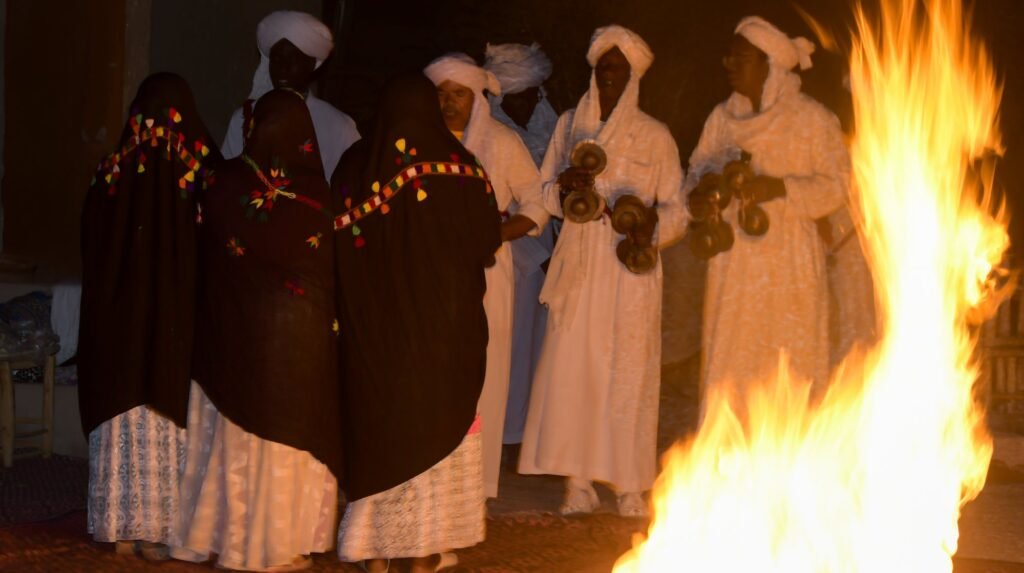
Gnawa
The music most associated with Morocco, and worth understanding before you hear it.
Gnawa comes from the descendants of people brought to Morocco from West Africa through the trans-Saharan slave trade. It is built on the guembri, a three-string bass lute, and the qraqeb, heavy iron castanets whose sound carries a long way. The traditional form is a lila — a ceremony that runs all night with a healing purpose, not a concert.
What you hear in a restaurant is a shortened version played for an audience. That is fine and often very good, but it is worth knowing it is an excerpt of something else.
On the square
Jemaa el-Fna has musicians every evening — gnawa groups, Berber ensembles, storytellers. It is free to stand and listen, and paying a few dirhams if you stop for a while is expected. Photographs are a transaction: ask first, and agree before rather than after.
Jazz and everything else
Marrakech has a steady jazz scene in hotel bars and a handful of restaurants, generally from around nine or ten. Arab-Andalusian ensembles turn up in riads and at private dinners. Dinner-shows out on the Palmeraie road package music, food and a spectacle together.
Festivals
Marrakech holds music and arts festivals through the year, and Essaouira — three hours west — hosts a large gnawa festival that draws international acts. Dates move, so check for the year you are travelling rather than relying on an old article.
Practical
- Music starts late. Nine or ten is the earliest anything real happens.
- Ask whether there is a cover charge or a minimum spend; both exist and neither is always announced.
- If you want music at your riad or villa for a private dinner, it is arranged in advance and needs space and a power supply.
EliteRak arranges musicians for private dinners and can tell you what is actually playing during your dates rather than what a listings page said last year.
Common questions
What is gnawa music?
A Moroccan tradition rooted in the descendants of West Africans brought north through the trans-Saharan trade, played on the guembri, a three-string bass lute, with heavy iron castanets called qraqeb. The full form is an all-night ceremony rather than a concert.
Is there live music on Jemaa el-Fna?
Every evening. Standing and listening is free, and giving a few dirhams if you stay a while is expected. Agree before taking photographs.
What time does live music start?
Rarely before nine, usually ten. Arriving earlier means the room before the musicians.
Can we have musicians at our villa?
Yes, arranged in advance. It needs space and a power supply, and the group size should suit the room rather than the garden if the evening is cold.
Planning a stay in Marrakech?
Tell us your dates and what matters to you, and we come back with what fits.