Marrakech
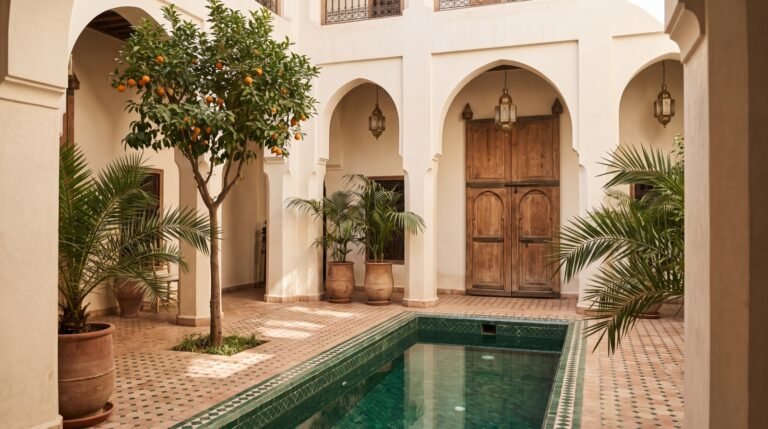
Riad in the Medina
A riad is a courtyard house inside the walled medina, rented whole with staff. Expect four to eight bedrooms around an open courtyard, a plunge pool…
What to expect →Marrakech
We do not publish a fixed catalogue. Tell us your dates, your group and what matters most, and we come back with two or three real properties that fit. These are the kinds of stay we arrange most often, and what to expect from each.
A riad is a courtyard house inside the walled medina, rented whole with staff. Expect four to eight bedrooms around an open courtyard, a plunge pool…
What to expect →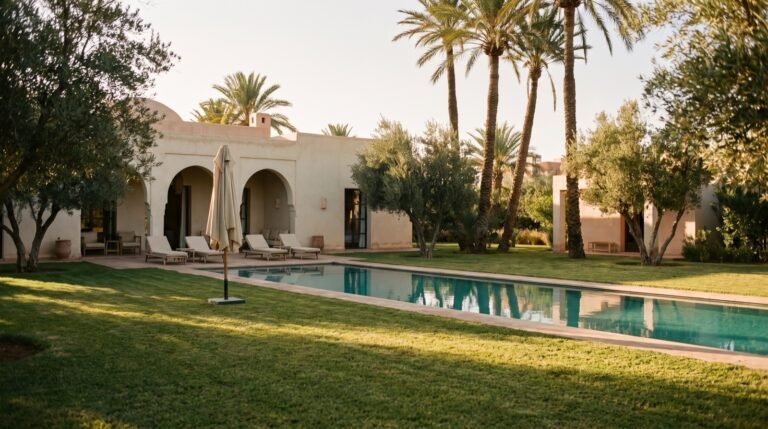
The Palmeraie is a palm grove twenty to thirty minutes north-east of the medina, and the classic Marrakech villa sits there: single storey, four to eight…
What to expect →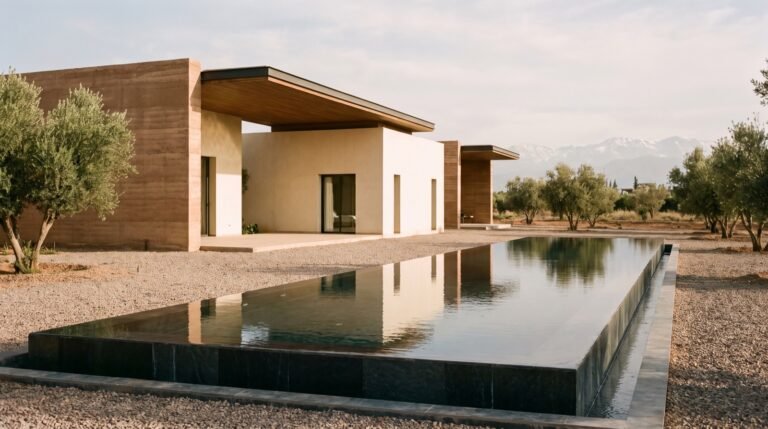
South of the city, along the roads towards Ourika and Amizmiz, sit newer architectural villas built to face the High Atlas. Typically four to six bedrooms,…
What to expect →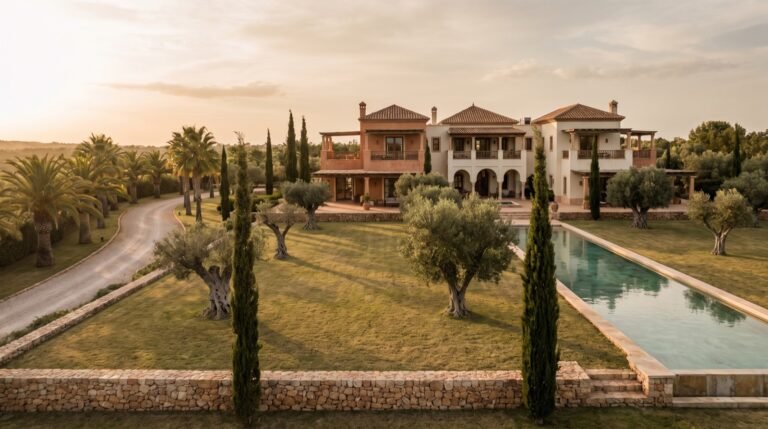
For sixteen to forty people, or for a wedding, the format changes: large grounds, eight to fifteen or more bedrooms often split between a main house…
What to expect →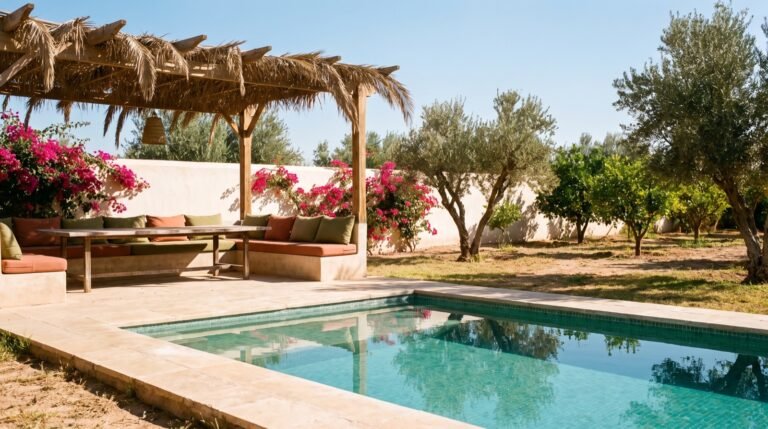
For families the priorities invert: the pool, the garden and where the bedrooms sit matter more than the architecture. Typically three to six bedrooms grouped together,…
What to expect →This is the first decision and it settles most of the others. A riad inside the medina is a courtyard house rented whole with staff: you walk out of the door into the souks and you do not need a driver for most of what you will do. The price of that is water. A pool in a riad usually means a two-metre plunge you cool off in, not something you swim lengths in, and the last stretch to the door is on foot — some riads are two minutes from a taxi, others eight minutes through lanes you cannot wheel a suitcase down.
A villa in the Palmeraie inverts it. You get a full-size pool, a walled garden and quiet, twenty to thirty minutes from the medina — and you need transport arranged, because taxis do not reliably come out that far. Treating the driver as an optional extra is the most common error here, and sorting it late costs more than arranging it up front.
| Riad, inside the medina | Villa, outside the walls | |
|---|---|---|
| The water | Plunge pool, occasionally none | Full-size, long or infinity pool |
| Getting to the door | Last stretch on foot | 20–40 minutes by car |
| A driver | Not needed for most of what you will do | Not optional |
| Typical size | 4–8 bedrooms round a courtyard | 3–8 bedrooms, often single storey |
| What to ask in winter | Whether the bedrooms have working heating | Whether the pool is heated, and what it costs to switch on |
Bedroom count on its own is a poor way to choose. Eight bedrooms spread between a main house and a distant annexe is a very different holiday from eight around one courtyard, and at the larger sizes it is worth establishing how much of the sleeping capacity is actually in the main house before anything else. Ask too how many bedrooms are genuinely doubles rather than a sofa bed in a study.
The medina puts you inside the thing you came for. The Palmeraie, a palm grove north-east of the city, gives space and quiet at twenty to thirty minutes. Further south, along the roads towards Ourika and Amizmiz, sit newer houses built to face the High Atlas — glass and rammed earth rather than carved plaster, quieter still, and twenty-five to forty minutes out. One caution on those: the mountain view does not bring mountain temperatures. They sit on the plain and take the full summer heat with less shade than an old medina house, and forty minutes each way turns a casual dinner in Gueliz into a two-hour commitment.
Between October and April an unheated pool is too cold to use, so whether a pool is heated — and what switching it on costs — is the question that changes a winter booking. In a riad the equivalent question is heating: thick walls and an open courtyard are built to keep heat out, which works against you in December and January, so confirm the bedrooms have working heating rather than extra blankets.
For families the priorities invert, and a family villa with garden and pool is chosen on different things: pool safety provision first — fence, net, alarm or nothing — then whether the children can sleep near you or are down a separate wing, then cots, high chairs and whether the cook will cook for children rather than only for adults. Choosing on photographs is the trap. A villa that photographs beautifully often has the pool edge flush with the terrace and the family bedrooms at opposite ends of the house, which are the two things that make a week with small children harder. Ask for a floor plan and a photograph of the pool edge.
Above sixteen people, or for a wedding, the format changes to an estate with large grounds, eight to fifteen or more bedrooms, and — the part that is not negotiable — a property that explicitly permits events. Not every large villa does, and that permission is the first thing to establish. After it come the catering model, since some estates require their own kitchen team while others let you bring a caterer, and whether there is enough covered outdoor space if the weather turns. At this size everything that matters should be in writing before payment: by the time you discover that music must stop at eleven, or that six of the beds are in a separate building, the deposit is paid.
Most requests do not fit neatly into a category. Tell us what you have in mind and we will tell you what is possible.
Talk to usWe would like to measure which pages people actually read, and which advert brought you here, using Google Analytics and the OpenAI advertising pixel. Nothing is loaded until you choose. The site works the same either way. Cookie Policy