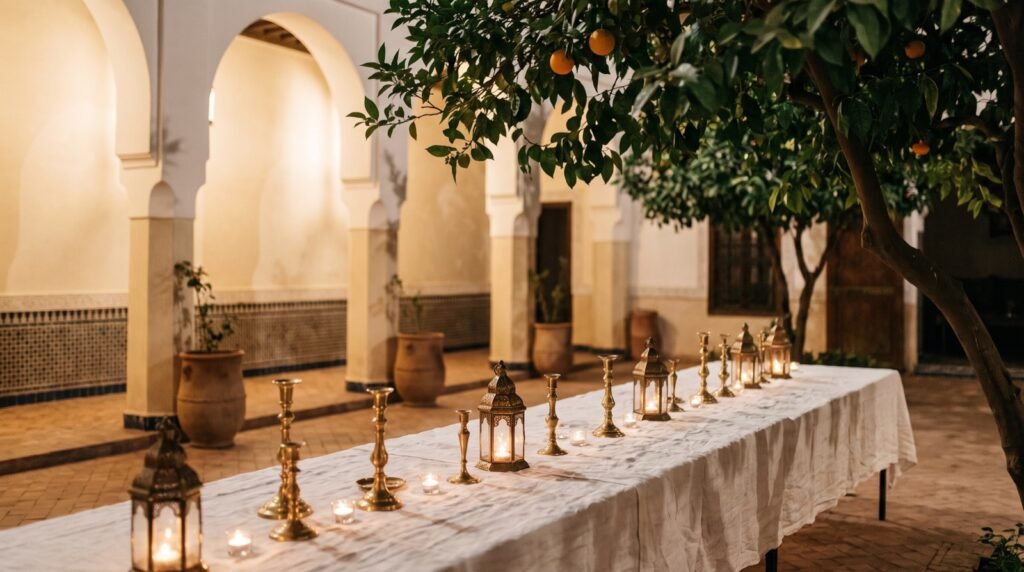
Marrakech has two dining worlds: the Medina and the new city
The Medina and the new city eat differently, and that choice shapes your evening more than any single restaurant does. Inside the walls: courtyards, Moroccan cooking, usually no alcohol. The Medina is not one place either, since Mouassine and Dar el Bacha, the Kasbah and the Mellah each eat differently. Outside: modern kitchens, wine, a taxi to the door. Most people are happiest alternating.
What is dinner in a Medina riad actually like?
Slow, quiet, and in a courtyard rather than a dining room. Riads are inward-facing houses: nothing looks out at street level, and the courtyard is the room. Quieter than a street-facing hotel, not silent — the courtyard is open to the sky, so you hear the neighbours, the mopeds in the derb and the dawn call to prayer. Most have a roof terrace that does look out over the Medina. Menus are short, often set, and cooked to order, so book hours ahead.
- Cars cannot reach most riad doors. You walk the last lanes from the nearest gate, poorly lit after dark.
- Ask when you book whether someone can meet you at the drop-off. Many riads will; it is a normal request, not a fuss.
- Courtyards are cold in winter. Take a layer.
Are the Jemaa el-Fna food stalls worth it?
Yes, once, and go in with clear eyes. The stalls go up in the square in the evening: grilled meat, harira, snails, sheep’s head. The grill work happens in front of you, so you can see how your food is handled and judge it stall by stall. Not everything is cooked to order: harira, snails, tanjia and sheep’s head sit in pots for hours, and the salads, sauces and bread are prepared in advance. Stick to what comes off the grill or out of a pot steaming hot, and leave the cold dishes if your stomach is at all delicate.
The pressure is the part to prepare for. Touts work the aisles and push extra plates. Agree the price of each plate before it is cooked, say no clearly, and check the table before you eat: bread, olives and sauces arrive unordered and are charged.
Where do you eat in Gueliz and Hivernage?
Gueliz is the new town: modern, licensed, easy to reach and not cheap. It is where the middle class and the resident foreign community eat out, not where Marrakech eats most nights — that is the neighbourhood grills in Massira, Daoudiate and M’hamid. What you get is pavements, cafés, bistros, a wine list and a taxi to the door, concentrated around the Marché Central and off Rue Tarik Ibn Ziad, with the newer kitchens along the boulevards. Ten to fifteen minutes from the Medina in a petit taxi: ask for the compteur, or agree the fare before you get in, because the quotes at the Medina gates are several times the real price and the official night tariff is higher after dark.
Hivernage is the hotel district: dressier, later, usually licensed, easy to reach by car. Safest for a group with mixed tastes, and the least Moroccan-feeling.
Palmeraie and out-of-town garden restaurants
These are lunch destinations, and you need transport both ways. The Palmeraie is the palm grove north-east of the city, roughly twenty to thirty minutes out. Agafay and the Ourika valley have similar places, but further out: reckon on about 40 minutes to Agafay, and 45 minutes to well over an hour into Ourika depending how far up you go, longer at weekends when Marrakchis are driving out too. Sidi Ghanem, the industrial estate on the Safi road, is closer, and is where the city itself goes for weekend lunch. You are paying for space, and a long lunch out there takes the whole day.
Petits taxis, the small city ones, are licensed for Marrakech itself and cannot legally run out to Agafay or Ourika, so those trips need a grand taxi or a private driver, booked as a round trip with the price, the waiting and the pick-up hour agreed before you set off. The Palmeraie is inside the city limits, so a petit taxi takes you out, but finding one back is much harder: have the restaurant call a car when you sit down, or keep the driver who brought you and pay him to wait.
Rooftop dining: what you get and what you give up
A view, usually at the cost of the food. Rooftops look towards the Koutoubia minaret and, on a clear day, the Atlas. The hour either side of sunset is the slot everyone wants, so ask for it when you book. Kitchens are two or three floors below, so plates arrive when they arrive. Winter evenings up there are cold, and some rooftops serve drinks only.
Alcohol and booking: sort both out before you arrive
Alcohol is limited inside the Medina and easy enough to find outside it. Many Medina restaurants and riads are unlicensed, some serve wine only to guests staying in the house, and a few will let you bring your own. Gueliz and Hivernage make it easier but not automatic: the cafés and most of the cheaper Moroccan places there are unlicensed too. The hotel restaurants are the reliable ones. Ask when you book, not on arrival.
One thing catches people out: Ramadan, roughly early February to early March in 2027, and about eleven days earlier each year after that. Alcohol service is cut back sharply or suspended outside the international hotels, and shops stop selling it. Most Medina restaurants close during daylight, many riads cook only for the house, and the whole city eats at sunset: book the iftar hour or eat late, and expect the square’s stalls to open around the cannon rather than at dusk. Eid is a milder version of the same.
Book anywhere you actually care about, and do it before you fly. Tell us your dates and where you would like to eat, and we can handle the arrangements: which nights work, the riad kitchens that need notice, and transport home at the end of the evening.
Common questions
Can you drink alcohol in restaurants in Marrakech?
Yes, but it depends where you eat. Inside the Medina many restaurants and riads are unlicensed, and some serve wine only to guests staying in the house, so ask when you book. Outside the walls, in Gueliz and Hivernage, licensed dining is common but not universal u2014 the cafu00e9s and cheaper places there are often unlicensed too, and the hotel restaurants are the reliable ones. During Ramadan, service is cut back sharply outside the international hotels.
Do I actually need to book restaurants in Marrakech?
Yes, at anywhere you care about. The better dining rooms in Marrakech tend to be small and can be booked up well ahead in high season, and riad kitchens often cook to order, so give them as much notice as you can. Walk-ins work for cafu00e9s and street food, not for a planned dinner.
Is it safe to eat at the Jemaa el-Fna food stalls?
It depends on the stall, and it is your judgement to make. The grilled food is cooked in front of you, so you can see how it is handled. Not everything is cooked to order, though u2014 soups, snails and sheep's head are held hot for hours, and the salads and sauces are prepared in advance. Stick to food that comes off the grill or out of a pot steaming hot, skip the cold side plates if your stomach is delicate, and check what has been put on your table before you start, because plates you did not order tend to appear.
What is the difference between eating in the Medina and eating in Gueliz?
The Medina is atmosphere: courtyards, Moroccan cooking, candlelight, usually no alcohol, and the last stretch of the journey on foot through unlit lanes. It is not one area either u2014 Mouassine and Dar el Bacha, the Kasbah and the Mellah each eat differently. Gueliz is the new town, where the kitchens are modern and international, licensed places are easy to find, and a taxi drops you at the door. The two are about ten to fifteen minutes apart.
Is it worth going all the way out to the Palmeraie to eat?
It is worth it for lunch, not for dinner. The Palmeraie is roughly twenty to thirty minutes from the centre of Marrakech and what you go for is space, gardens and shade rather than the food alone. Arrange your return before you set off: taxis are easy heading out and unreliable coming back, and for Agafay or the Ourika valley, which are further, you need a grand taxi or a private driver rather than a petit taxi.
Planning a stay in Marrakech?
Tell us your dates and what matters to you, and we come back with what fits.